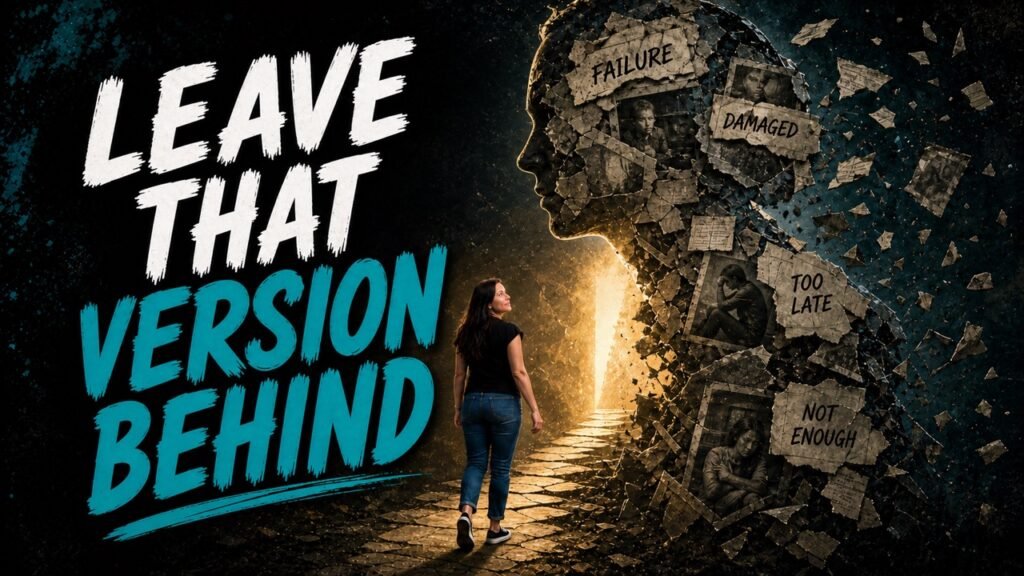
Label or Lesson: A Rewrite You Can Actually Defend
A label can be easy to recognize and surprisingly hard to replace. “I’m bad with money” may clearly be a label once you look at it. A useful replacement has to be specific enough to believe and practical enough to act on.
Write the Lesson
The actual rewrite is straightforward on paper: take the label and ask what specific, checkable claim is underneath it.
“I’m bad with money” becomes “I need a simple system and to look at my finances consistently.” “I’m not good at relationships” becomes “I need to understand my patterns and choose more carefully.” Notice the shape changing along with the words: the label is short, absolute, and closed. The lesson is longer, specific, and has a next step already built into it.
If more than one label comes to mind, choose one to work with for now.
The label I’ve been carrying: ______
The lesson underneath it: ______
The Cross-Examination
This is the part most rewrites skip, and it’s where the whole exercise either holds or falls apart. A rewritten sentence can fail in two directions. It can still be a label wearing a lesson’s outfit, with nothing underneath the softer wording, or it can swing the other way into a declaration you don’t actually believe yet, said through gritted teeth.
Test your own rewrite against three questions before you trust it:
Can you point to the specific thing you’re doing about it? “I’m learning to manage money differently” holds up if you can name the actual system. If there’s nothing underneath the verb, it’s still a label with softer wording.
Would it survive being said out loud to someone who knows the whole story? A sentence that only works alone, in your own head, usually isn’t ready yet.
Does it move you, or does it just excuse you? A lesson gives you somewhere to go this week. A label, however it’s dressed up, mostly just confirms you’re allowed to stay where you are.
Give the Lesson Evidence
A lesson that survives the cross-examination still isn’t finished. It’s an idea about yourself, and an idea by itself doesn’t change anything a label used to control. What changes it is evidence, and evidence only comes from something you actually do.
Pick one small, concrete action the lesson points toward, and do it this week. If the lesson is “I need a simple system for money,” start with the one account statement you’ve been avoiding. If the lesson is “I need to understand my patterns before I choose again,” start by naming one pattern out loud to someone you trust.
The action can be small. What matters is that it’s real, because a completed action is evidence in a way a rewritten sentence on its own never quite is.
Back to the Episode
Sophia eventually stopped rehearsing the conversation with her sister and began paying attention to the apartment, the job, and the life that had been sitting in front of her. Her past stayed part of her story without remaining the description she used to live from.
Read the full video transcript
[00:00:00]
Marie: Sophia could still hear the sentence from her parents' kitchen as if the conversation had happened yesterday. She had replayed the afternoon so often that the memory no longer felt like something she had experienced. It felt like a description of her. That is the line we're looking at today, the point where, "This happened to me," quietly becomes, "This is me."
I'm Marie, and this is Marie Charlie, where awareness and action work together to move a life forward. You don't have to erase an experience to stop using it as identification. The work here is more precise. We keep the truth of what happened, find the label that formed around it, and decide whether the lesson can stay after the label is released.
Think of one word you use to describe yourself because of something you lived through. Maybe the word came from you. Maybe someone else handed it to you years ago. Just bring it to your mind. Sophia's way [00:01:00] forward began when she changed one word in the way she told a story. That small change gave her a view through the windshield again.
Have you ever gone through something painful, a betrayal, a version of yourself you didn't love, feelings you've ignored for too long, and instead of naming the pain, quietly turned into an identity? Underneath, "I'm terrible at relationships," is usually something smaller and more honest. "I don't trust myself yet."
But once it becomes an identity, it starts making choices for you. You avoid intimacy. You second-guess anyone who treats you well because it doesn't matter what you've already decided about yourself. There's a difference between saying, "I went through something painful," and saying, "I am damaged." A difference between, "I made a mistake," and, "I am a mistake."
A difference between, "That season was hard," and, "My life is always hard." One is an experience, the other is an identity, and when we [00:02:00] confuse the two, we end up living inside a version of ourselves that was created during pain, not truth. I think this confusion starts earlier than most people realize. As children, we hear labels. You're shy, you're difficult, you're smart, you're the responsible one, you're the one who always messes up.
And whether those labels come from parents, from teachers, or life experience, many of us carry them into adulthood without ever questioning them. Then life adds more. Divorce, failed, successful, unlucky, behind, too late, not enough. And after a while, we stop seeing them as descriptions. We start seeing them as identities.
Maybe it shows up around money instead. You grew up around financial stress, made some real mistakes, avoided opening bills when things got bad, and started [00:03:00] saying, "I'm bad with money." That sounds honest, but is it an identity or a skill gap? Is it who you are or something you learned, avoided, feared, and never practiced? "I'm bad with money" becomes a prison. "I'm learning to manage money differently" would create movement. The mistake was real. It just didn't have to become the self. There's a difference between saying, "I experienced failure" and "I am a failure." One describes an event, the other describes an identity. Someone can experience a failed business and still become a successful entrepreneur. Someone can experience a painful divorce and still create a healthy relationship.
The experience is real, the event happened, but the event doesn't automatically become your identity. Here's the best way to test which one you're [00:04:00] carrying. An experience is something you can describe from a slight distance. "That was a hard year," spoken almost like you're describing weather that passed through.
An identity collapses that distance completely. There is no gap left between you and the label. It's not raining on you, you are the rain. If you can't tell a story without your voice tightening the same way it did the day it happened, you're probably not holding an experience anymore. You're holding an identity.
You might be thinking, "But what if it's just true? What if I really am bad with money, genuinely difficult in relationships?" Fair question. Here's the honest test. Has this actually been retested lately under different conditions, or is it running purely on old evidence you stopped updating years ago? A label that hasn't been checked against [00:05:00] anything new isn't a fact about you. It's a memory wearing a fact's clothing. And a label rarely stays where it started. "I'm bad with money" didn't just affect your bank account. It can quietly decide whether you ask for a raise, whether you split the bill evenly, whether you even open the email from your accountant.
One label, once it hardens into identity, ends up making decisions for you that you weren't really planning on making. This matters beyond how the past feels to remember. It shapes what you risk today. Someone carrying, "I'm not good at relationship," doesn't just feel sad about that. They screen new people through it, half looking for the moment that confirms it, half avoiding the vulnerability that might disprove it.
The label isn't just a memory. It's an active [00:06:00] filter deciding what gets let in and what's kept at arm's length. That's why the label felt safer than the truth in the first place. "I don't trust myself yet," requires you to eventually test that trust again, which is frightening. "I'm terrible at relationships," closes the question permanently, which feels safer in the short run, even though it costs you the relationship you might actually want.
Most identities aren't chosen out of self-punishment. They're chosen because the alternative, staying open to being hurt again, felt like more than you could carry at that time
Sophia spent nearly three years replaying the same conversation with her sister, rehearsing the comeback she never said, editing the argument in her head like she could still win it. From the outside, her life had moved on. New apartment, new job, plenty of new things to look at. But she wasn't looking at any of them. She was still [00:07:00] looking at one afternoon in her parents' kitchen. I think about Sophia's three years like driving a car while staring only at the rear view mirror. The mirror has a purpose. It gives you information. It helps you stay aware, but you're not supposed to drive with your eyes locked on it.
If you do, you'll miss what's in front of you. That's what many of us do emotionally. We play old conversations, old failures, old decisions, old versions of ourself, then wonder why moving forward feels so hard.
The problem was never that the rear view mirror exists. The problem is when we start using it as the windshield Notice that Sophia's rear view mirror didn't feel like avoidance from the inside. It felt like diligence, like she was finally going to get the ending right if she just replayed it one more time. That's what makes an identity [00:08:00] so much stickier than an experience. An experience you can set down because you're done with it.
An identity feels like unfinished business, like something you owe an explanation to, even when the only person still asking for one is you. Here's where most people get stuck without realizing it. They keep making today's decisions based on evidence from a chapter that already closed. We use past evidence to make future decisions.
I failed before, so I'll probably fail again. I trusted before and got hurt, so I shouldn't trust again. "I tried before and it didn't work, so why bother?" And we call it wisdom, but sometimes it isn't wisdom, it's fear that learned how to sound mature. Take a moment and go looking for your own rear view mirror. Not the loud one everyone in your life already knows about, [00:09:00] the quiet one, the conversation or decision you still edit in your head on ordinary days with no obvious reason.
However small it seems, the fact that it's still getting air time after all this time is worth paying attention to. And often other people help keep the mirror angled the way it is. A parent who brings up the same old disappointment at every holiday, a friend who still treats you like the person you were during your hardest year.
None of them mean harm by it most of the time, but every reminder makes it a little easier to keep believing the mirror is actually the windshield. It shows up outside relationships too. A man might replay one disastrous presentation for years, using it to justify never volunteering to present again, even after a decade of quietly competent work that never [00:10:00] gets the same rewind treatment. The mirror doesn't play fair. It replays the worst afternoon on a loop and gets 1,000 ordinary, perfectly fine ones go completely unremembered. It's worth being honest too, that stepping out of the mirror doesn't happen in one clean motion.
You might look forward for a while and then catch yourself back there again replaying the same afternoon out of nowhere. That's not failure. Old habits of attention don't retire after one good drive. The goal isn't to never glance backward again. It's to notice sooner when you have and turn your eyes back to the road a little faster each time
Psychologist Albert Ellis built his therapeutic approach around a practical distinction. Events affect us, and our beliefs about those events affect how we continue [00:11:00] responding. He encouraged people to name rigid beliefs plainly and examine the evidence for them. The word rigid matters. "I handled that badly" can lead to repair.
" I am a bad person" turns a behavior into an identity and leaves far less room to respond. Ellis could be direct, sometimes more direct than people would prefer. We do not have to copy his style to use the question underneath it. What exactly am I claiming about myself, and what evidence supports a claim that broad?
There is also a human reason labels become attractive. An identity can make a confusing experience feel organized. If I decide I'm unlovable, I no longer have to live with uncertainty about why someone left. I have an explanation. It hurts, but it feels settled. That's why loosening a label [00:12:00] can feel vulnerable. You are giving up a familiar explanation before the new understanding is complete. Sophia did not need to argue that the kitchen conversation was harmless. It was not harmless to her. She needed language that could keep the experience in the past tense.
That happened. It affected me. I learned from it. It is not my name. Read your own label that way. Which part is an experience? Which part is lesson? Which part turned into identity because identity felt easier to carry than uncertainty? You may decide that part of the label still describes a current struggle.
Fine. We are not trying to win an argument with yourself. We are making a claim specific enough to work with. I shut down during conflict gives you somewhere to begin. I am damaged gets you nowhere Think [00:13:00] about a sculptor standing before a block of marble. Most people see heavy stone. The sculptor sees possibility. The marble still has marks, rough edges, but the sculptor doesn't reject it for being unfinished. They work with it, shape it, reveal what's already inside. Maybe your life isn't so different.
Maybe the rough places aren't proof nothing beautiful can come from you. Maybe they're just where wisdom gets carved. Here's a quick way to check whether you're carving or just staring at the stone. Does thinking about the label move you towards doing something differently this week, or does it just confirm your right to stay where you are?
A lesson moves you. A label mostly just repeats itself. Instead of, "I'm a failure," try, "I experienced failure, and I'm learning from it." Instead of, "I am broken," try, "I've been hurt, [00:14:00] and I'm healing." Instead of, "I am behind," try, "I'm beginning from where I am." But see, there's an opposite trap too. Some people here change the label and swing straight into forcing a cheerful new sentence that doesn't actually believe itself yet.
"I'm a completely confident person now," said through gritted teeth. That's not carving the marble. That's painting over the cracks and hoping nobody looks closely. A lesson you can actually stand behind sounds more modest than that, and a lot more durable. A useful check here: could you defend the new sentence under Ellis' cross-examination?
"I'm learning to manage money differently" holds up. You could point to the specific thing you're doing about it. "I'm amazing with money now" probably wouldn't survive the same questioning yet. The sturdier lesson is usually the less dramatic [00:15:00] one. Marie reveals the label. Charlie challenges the label. Marie says, "Look at this.
This is what you've been calling yourself." Charlie says, "Now, what will you do differently?" Labels also flatten context. You may call yourself indecisive even though you decide quickly at work and freeze only when a relationship feels at risk. You may call yourself undisciplined while reliably caring after everyone except for yourself.
Once context returns, the identity becomes a pattern with conditions, and conditions can be studied. Ask when the label is strongest, when it is absent, who is present, and what you are protecting in that moment. Those questions do not excuse behavior. They make behavior specific enough to change. This is why the lesson matters more than the label.
A lesson can say, "I need time before I answer when I [00:16:00] feel cornered." That sentence respects your experience and gives you a practice. "I ruin relationships" gives you shame and no instruction.
Write down one label you've been carrying, just one. Maybe it's, "I'm bad with money. I'm not disciplined. I'm not good at relationships. I never finish what I start." Then ask, where did this come from? Did I choose it or did someone hand it to me? Is this who I am, or is this something I experienced?
So let's look at this in a few different areas. In a career, the label might be, "I'm not leadership material." In a friendship, it might be, "I'm too much." In your health, it might be, "I don't have discipline." The setting changes, but the pattern holds. One hard chapter turned into a permanent verdict about the whole book.
Then do one more thing. Write the [00:17:00] lesson without the label. Instead of I'm bad with money, maybe the lesson is I need a simple system and to look at my finances consistently. Instead of I'm not good at relationships, maybe it's I need to understand my patterns and choose a healthier place.
Carry the lesson. Release the label. The lesson guides you forward. The label just keeps you rehearsing the past. Notice the shape of the lesson compared to the label. The label is short, absolute, closed. I'm bad with money. The lesson is longer, specific, and has a next step built into it. That's not an accident. A sentence that tells you what to actually do is doing a different job than a sentence that just tells you what you are, and only one of those two jobs moves you anywhere.
Before you settle on which label to work with, pause on one more question. [00:18:00] Out of everything you've been carrying, which label is actually costing you the most right now? We've done this in our past chapters. You likely have more than one running. You don't need to release all of them, just like in the past.
Find the one with the most grip and start there. That's discernment, not avoidance of the rest. That's the shift worth making, not overnight, not with one declaration. Maybe you start writing, "I don't trust myself yet," instead of, "I'm terrible at relationships," and let yourself get to know one person slowly instead of pushing everyone away before they get close.
Maybe you open the one bank statement you've been avoiding for three months and read it from start to finish. That's the whole win. That's what Sophia eventually did with her three years too. She didn't stop missing what her sister said that day. She just stopped rehearsing it. She started looking at the new [00:19:00] apartment, the new job, the actual life in front of her windshield one day at a time. It might not feel resolved the first time you try this, and that's worth expecting going in.
You could name the lesson clearly on Monday and still catch the old label running it by Thursday. That's not the exercise failing. That's a label that's had years of practice meeting a lesson that's had one week. Give the lesson more weeks. It gets stronger with repetition the same way the label once did.
A small real step works better here than a big declaration for the same reason it always does. A declaration is just a new label, and part of you already knows how many old labels didn't work. A completed action is something else entirely. It's evidence, and evidence is the one thing that identity has never been able to argue its way [00:20:00] around.
This doesn't end when this video does either. The next time you hear yourself say an I am sentence that sounds more like a verdict than an observation, that's your cue. Is this a label or a lesson? You won't always have a notebook handy, and most of the time just noticing the question in the moment is enough to loosen the label's grip a little further.
Are you starting to see a pattern with these lessons? That's the actual practice. Not a single exercise you finish once, but a habit of catching the label a little earlier every time it shows back up. Drop a comment with the one word that fits label or lesson, whichever one you're sitting with right now.
I read these, and it helps me get to know what to cover next.
You are more than your worst day. You are more than your biggest mistake. You are more than the relationship that ended, [00:21:00] the business that didn't work, the season where you lost yourself. Your past deserves to be acknowledged. It deserves to be learned from. It deserves compassion, but it does not deserve to decide who you become because the person you're becoming always has more influence over your future than the person you used to be.
None of this asks you to feel finished with the past before you're allowed to move on. It only asks you to stop letting an old label make decisions a current lesson could make better. If you take nothing else from this episode, take this: The label was never a fact about you. It was a conclusion reached under pressure by a version of you doing the best it could with what you knew at that time.
That version of you deserves gratitude, not permanent obedience. You're allowed to [00:22:00] thank the label for whatever protection it offered and still set it down. Awareness opens a door, action walks through it, and transformation happens on the other side
Because once we stop defining ourselves by the past, we start noticing doors we couldn't see before, and that's exactly where we're headed next. In the next episode, we're exploring what actually becomes possible once you stop living from an old identity, and I'll show you exactly what changes the moment you do.
Your past is a chapter. It's not the title of your life. I'm Marie, this is Marie Charlie, and until next time, take care